Power where and when it’s needed
Small enough to be built in a factory.
Big enough to power data centers.
A reactor designed for the AI era.
Compact Size.
55 MWe per unit and scalable with demand.
Lower Cost.
Serial production leads to faster deployment at lower cost.
Flexible Siting.
Passive safety enables co-location with the industries we serve.
TECHNOLOGY
LEAD-COOLING
The SEALER builds on a cooling technology in use since the 1960s, now reimagined for modern applications through Blykalla's materials breakthrough.

Compact Design
High Power Density
Lower Cost
Serially Produced in Factories
Walk-Away Safe
Harnessing Properties of Lead
True Co-Location
Precautionary Zone ~100m
Scalable Parks
Capacity Added with Demand
Next Generation Nuclear Power. A New Paradigm for Energy Production.
Global electricity demand reached 31,779 TWh in 2025 and keeps climbing. Artificial intelligence, electrified transport and heavy industry are all arriving on the grid at once. Meeting that demand takes power that is carbon free, available every hour, and sited where operations take place. Modular construction cuts capital cost and build time compared to large-scale plants. Shorter builds carry less project risk, which brings the total cost of advanced nuclear down to an estimated 50% of the cost of large-scale projects.
Global nuclear capacity is projected to reach nearly 1,000 GW by 2050.
Driven by clean energy goals and rising electricity demand.
A Breakthrough Materials Innovation. Finally Enabling Commercial Use.
Lead is close to an ideal reactor coolant. It shields radiation, carries heat at atmospheric pressure, and stays liquid across the entire operating range. It has been used as a coolant for over 60 years, but with one key challenge: liquid lead corrodes conventional steel. This is the problem Blykalla solved.
For decades, our founders researched materials that could withstand liquid lead. The answer was a self-healing, aluminum-alloyed steel. It grows a thin layer of aluminum oxide that keeps the lead and the steel apart, and where the surface is scratched, the layer reforms on its own using the oxygen already dissolved in the lead. This is the materials breakthrough that paves the way for commercial deployment.
Based on 25+ years of research.
Now taking lead-cooling to market.
REIMAGINING
REACTOR PARKS
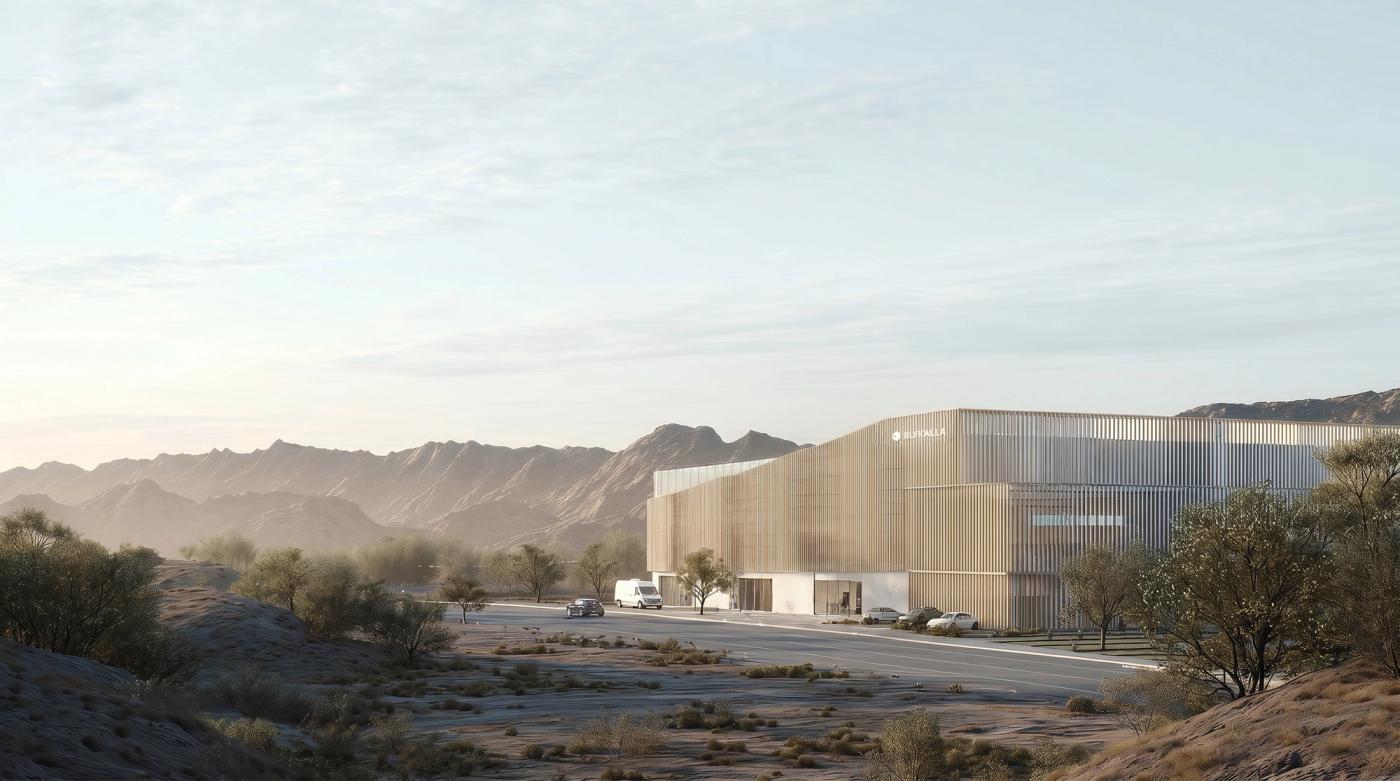
Designed for flexible deployment and true co-location with industries and AI infrastructure.